Material guide · Bedding
Coyuchi Bedding: How Fiber and Construction Shape Comfort
A cozy layer is about more than softness. Fiber, stitch, weight and finishing all play a part in how a blanket or throw feels, drapes and fits into everyday life. Here’s a practical guide to reading those details before you choose a layer for the bed.
Published October 12, 2026
Comfort starts with the material—and keeps going
When a bedding layer feels just right, it is tempting to credit the fiber alone. Cotton can feel cool and familiar; alpaca can feel lofty and warm. But the experience of a blanket or throw also depends on how those fibers are spun, knitted or woven, and finished. A breathable fiber in a dense construction may feel quite different from the same fiber in an open, flexible knit. Meanwhile, a soft surface can be lovely against the skin but require more careful maintenance than a sturdy, washable everyday layer.
That is why a useful comparison of Coyuchi bedding begins with the details, not a single promise on a label. Composition tells you what the textile is made from. Construction describes how it is put together. Finishing details—such as hems, fringe or washing—affect the way it looks and holds up in use. Together, these clues help you picture how a layer may behave on a bed, across a chair, or during a cool evening at home.
Throws and blankets are especially versatile: they can add warmth over a duvet, sit at the foot of the bed for an extra layer, or move from bedroom to sofa as the day unfolds. They are not all intended to replace sheets or a main blanket. Instead, think of them as flexible parts of a larger sleep and lounging setup, chosen to complement your climate, preferred texture and care routine.
What fiber content can—and cannot—tell you
Start with the composition label. It identifies the fibers in a textile and, when a product is blended, the proportion of each. That information is a helpful first step, but it is not a complete forecast of comfort. Fiber names describe raw material; the yarn, stitch or weave, fabric weight and finishing determine much of the finished feel.
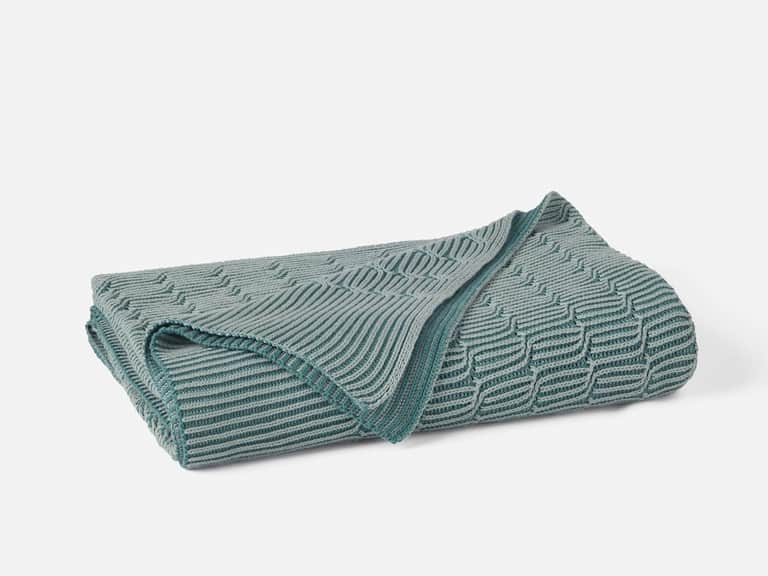
Organic cotton is often a good choice for people looking for a familiar, breathable natural fiber. In a knit throw, cotton can create a flexible layer with visible texture and a relaxed drape. The Ivy Organic Knit Throw, for instance, is made from 100% organic cotton. Its knitted construction gives it a soft, textile-rich look, while its reversible tonal design offers two subtly different surfaces. The product details also identify it as GOTS certified and made in a Fair Trade Certified factory in India. Those are specific sourcing and production details worth considering alongside the hand feel.
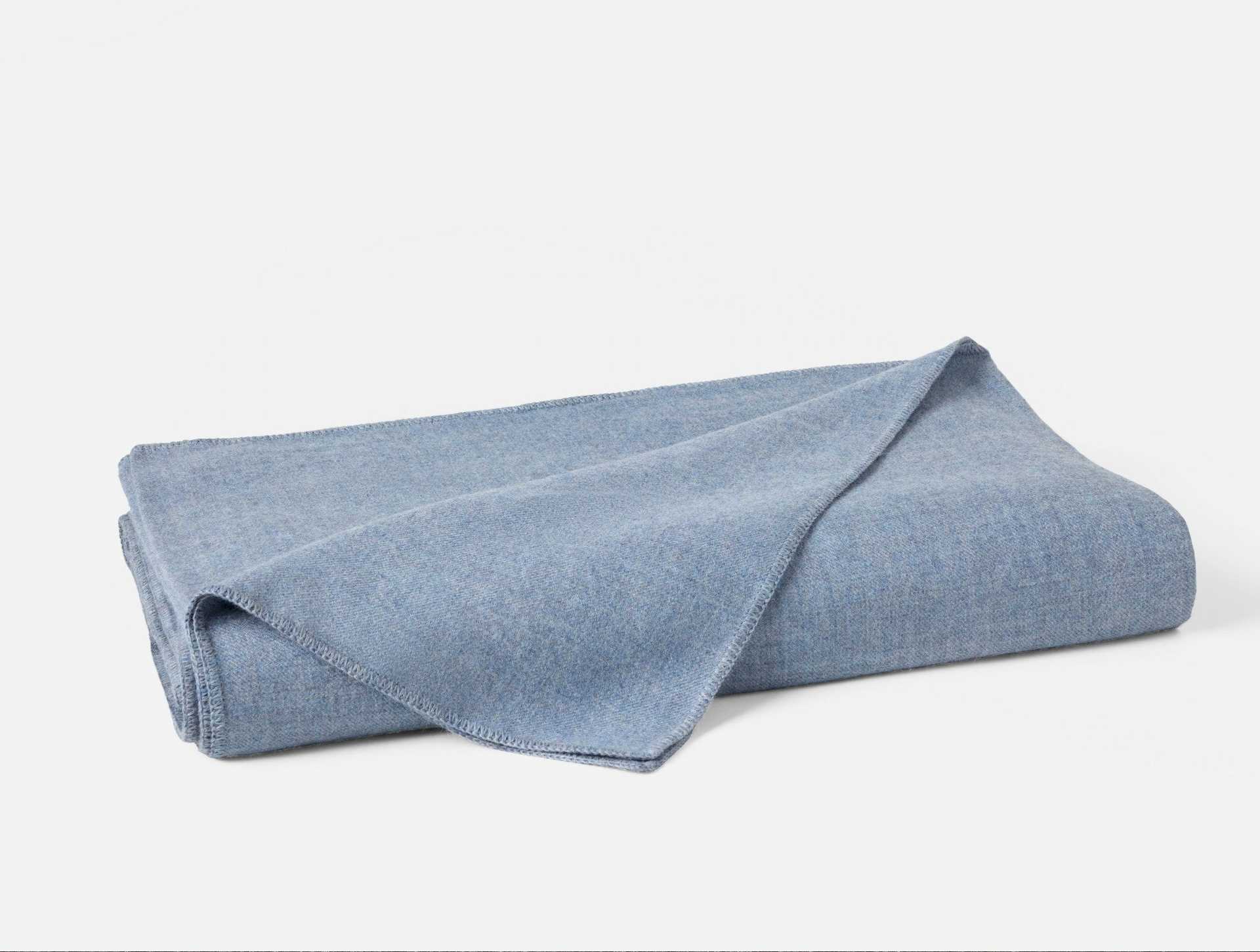
Alpaca brings another character to a layer. A blanket made from 100% baby alpaca, such as the Pacaya Alpaca Blanket, uses a twill weave and a blanket-stitched hem. Its product information describes the fiber as lightweight and warm, with a soft hand and drape. For someone seeking an insulating layer that does not feel like a heavy, rigid cover, those construction and material details may be particularly relevant. The stated care is dry clean only, an important practical consideration before choosing it for frequent use.
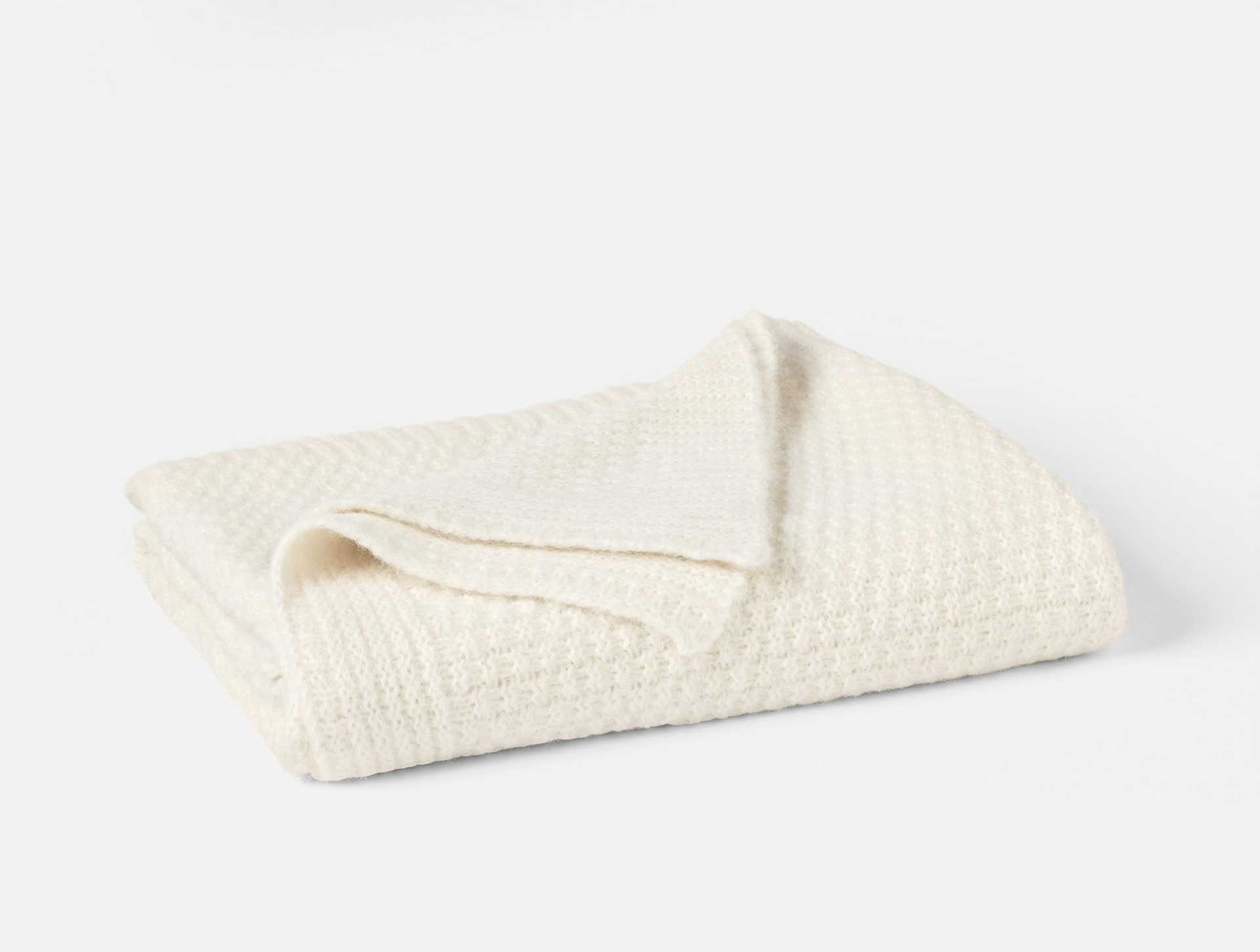
A blend can bring together qualities that readers may value in different fibers. The Cordillera Alpaca Cotton Knit Throw combines 56% alpaca and 44% Pima cotton. Its seed stitch creates a textured knit, and the blend is described as offering lightweight warmth and breathable softness. Rather than treating a blend as automatically better or worse than a single-fiber textile, consider what the combination is intended to do and how the finished construction feels to you.
Fiber content also does not guarantee that every person will experience a textile the same way. Sensitivity, room temperature, sleep habits and personal preferences all matter. If you are unsure how a material feels against your skin, check the product information carefully and, where possible, handle a sample or test the layer in a way that follows the retailer’s return policy.
Knit or weave: why construction changes the feel
Construction is the next clue to comfort. Knitting forms interlocking loops, which can make a fabric flexible and give it a springy, textured surface. A knit may drape easily over a bed or shoulders, though the feel varies with yarn thickness, stitch pattern and density. Woven fabric is formed by crossing yarns over and under one another. Depending on the weave, it may feel more structured, smooth or substantial.
The distinction is not a simple contest between soft and firm. A loose knit can feel airy, while a dense one may feel more compact. A twill weave can have a supple drape, and other woven structures may feel crisp or sturdy. Construction is best read as a description of how the textile is made—not as a guarantee of exactly how it will feel in every home.
Look at named stitches and weaves as useful, concrete details. The seed stitch on the Cordillera throw produces a distinct, pebbled texture that adds visual depth. Its knit construction can make the layer feel more relaxed and tactile than a smooth sheet. The Pacaya blanket’s twill weave offers a different surface and drape. The Ivy throw’s knitted fabric, meanwhile, is finished with five-inch hems at the top and bottom, giving the edges a defined frame.
These differences matter in how you use a layer. If you want something to fold neatly at the foot of a bed, a more structured textile may appeal. If you prefer a throw that gathers easily around you while reading, flexibility and drape may be more important. For a decorative layer, stitch definition and reversible design can carry as much appeal as warmth. Imagine the textile in its likely setting, rather than judging by fiber name alone.
Weight, warmth and breathability in the bedroom
Weight affects how a layer sits and feels, but it should not be confused with warmth in a straightforward way. A heavier blanket may feel more substantial and provide a reassuring sense of coverage. A lighter layer may be easier to move, fold or use through changing seasons. Yet fiber and construction influence insulation, too: an airy knit, a compact weave and a brushed surface can each behave differently, even if the textiles seem similar at first glance.
Consider your room and routine. A well-heated bedroom may call for a light throw to take the edge off a cool evening, while a drafty room may benefit from a warmer layer placed over the usual bedding. If temperatures change across the year, a throw that can be added or removed without remaking the bed offers welcome flexibility. For people who tend to overheat, breathable feel and easy layering may matter more than maximum thickness.
Breathability is often discussed as if it were a fixed property of a fiber, but it is also shaped by yarn, density and the structure of the finished fabric. The open spaces in a knit and the tightness of a weave can affect how air moves through the material. A cotton blend or natural-fiber textile may suit someone seeking a less stuffy-feeling layer, but the best choice depends on the specific fabric and how it is used.
One sensible approach is to build comfort in layers rather than relying on a single all-purpose textile. Keep your everyday bedding as the foundation, then add a throw for targeted warmth. That makes it easier to adapt to a cool morning or a warmer night without changing the entire bed. A midweight layer can also move with you from the bed to a reading chair, giving it a role beyond the bedroom.
The finishing details deserve a closer look
Edges, hems and surface treatments may seem like small details, but they shape both appearance and practical use. A neat hem can give a knit a tidy outline. A blanket-stitched edge can protect and define the perimeter. Fringe adds movement and an artisanal touch, though it may call for extra attention during storage and cleaning.
The Ivy Organic Knit Throw’s substantial top and bottom hems give its reversible knit a clear finish. The Pacaya blanket also has a blanket-stitched hem, while the Cordillera throw’s seed stitch makes texture a feature across the surface. These are different solutions for different visual effects; none should be taken as a universal measure of quality without looking at the full construction and how the item is made.
Color and surface texture affect the way a layer sits within a room, too. A tonal reversible design can offer variety without requiring a second blanket. A textured stitch can add dimension to a simply made bed, while a smoother textile may suit a more minimal arrangement. Think about the palette and textures already in the room, as well as whether the blanket will be displayed, used daily or both.
Finishing can also influence maintenance. Delicate fibers, decorative edges or particular treatments may have specific cleaning requirements. A visually simple throw is not necessarily easy-care, and an elaborate-looking knit is not necessarily fragile. Let the care instructions—not assumptions based on appearance—guide your routine.
A realistic guide to bedding care
Care instructions are part of the comfort decision because the easiest textile to enjoy is one that fits your household habits. If you prefer to wash blankets at home, check whether machine washing is explicitly permitted. If a product says dry clean only, factor in the time and expense of professional care before making it part of your regular rotation.
The Ivy Organic Knit Throw is listed as machine washable, while the Pacaya Alpaca Blanket and Cordillera Alpaca Cotton Knit Throw are listed as dry clean only. That difference is meaningful. A machine-washable option may be more practical for frequent everyday use; a dry-clean-only layer may work better for someone comfortable with more careful maintenance. Neither choice is inherently right for everyone.
For any textile, follow the maker’s care label over general internet advice. Avoid assuming that a natural fiber can be washed in the same way as another natural fiber, or that a knit can tolerate the same handling as a woven blanket. Water temperature, agitation, detergent and drying method can affect shape and surface. When instructions are limited or unclear, ask the retailer or manufacturer for guidance before trying an unfamiliar cleaning method.
Between cleanings, regular airing and careful storage can help keep a layer fresh. Fold blankets loosely rather than compressing them for long periods, and store them in a clean, dry place. Keep delicate textiles away from snags, rough surfaces and unnecessary friction. If pilling appears, do not pull fibers by hand; use a suitable fabric-care tool only if the care guidance permits it, and proceed gently on an inconspicuous area.
How to compare options without getting lost in the details
When a label seems packed with textile terminology, turn the information into a short list of questions. This makes it easier to compare natural fiber bedding and choose a layer that fits real life rather than an idealized picture of comfort.
- What is the fiber content? Identify whether the textile is cotton, alpaca, a blend or another material, and note the percentages when they are provided.
- How is it constructed? Look for knit, weave and stitch details, such as seed stitch or twill, that offer clues about texture, structure and drape.
- How do you plan to use it? A throw for occasional extra warmth may have different priorities from a layer used every night.
- What does the care label require? Match the care routine to the time and resources you realistically have.
- Are sourcing claims specific? Note stated certifications, fiber origins and places of manufacture, while distinguishing verified product details from broad marketing language.
- Does the texture suit your room and preferences? Think about the surface, color, weight and how the layer will feel against your skin.
For example, someone prioritizing a washable knit may be drawn to the Ivy Organic Knit Throw’s organic cotton content, reversible design and machine-washable care. A reader who wants a distinct textured surface and a cotton-alpaca blend may find the Cordillera’s seed stitch and fiber mix more relevant, while accepting its dry-clean-only instructions. Someone seeking a pure alpaca woven blanket with a twill structure may look closely at the Pacaya and weigh its warmth and drape against its care needs.
This is not a ranking. It is a reminder that bedding is personal, and a thoughtful choice balances feel, function and upkeep. A textile that is beautiful but inconvenient to care for may spend more time stored away than in use. A practical piece that fits your climate and habits can become the layer you reach for again and again.
A note on organic labels and responsible sourcing
Words such as “organic,” “responsible” and “sustainable” can refer to different aspects of a textile’s journey. An organic certification may address fiber production or processing standards, while a Fair Trade designation relates to requirements for participating producers and workers. Country-of-origin information identifies where a product or a stage of its production took place. These details can help readers ask better questions, but they are not interchangeable.
The available details for the Ivy Organic Knit Throw identify it as GOTS certified and made in a Fair Trade Certified factory. Those are more useful than a vague claim alone because they name particular standards or certification programs. Still, readers should consult the certifying organizations and product documentation if they want to understand what each claim covers. Do not assume that one certification answers every question about labor, farming, dyeing, transport or environmental impact.
For blended textiles, examine the composition of each component and any associated sourcing information. A blend can combine useful fiber qualities, but a percentage label alone does not provide a complete picture of the supply chain. Clear product descriptions that state materials, construction, origin and care give readers a stronger basis for comparison.
The takeaway: choose the layer that works for your life
Evaluating Coyuchi bedding is less about finding a universally perfect fiber and more about understanding how materials and making interact. Organic cotton, alpaca and alpaca-cotton blends can each create appealing layers, but their feel depends on construction. Knit and woven structures change texture and drape; weight affects how a blanket sits; hems and stitches shape the finish; and care directions determine how easily a piece fits into everyday routines.
Read the label as a practical guide. Match the fiber and construction to your temperature preferences and desired texture. Check how the item is cleaned before imagining it in constant rotation. Consider certification and origin claims with care, and look for specific details rather than broad promises. With those questions in mind, a throw or blanket becomes more than a finishing touch: it becomes a considered layer, chosen for the way you actually rest, lounge and live at home.